
Building a bridge between education and industry
In response to concerns over a future skills shortage, Sandvik Coromant and a Canadian technology institute formed a partnership based on the need to educate and train future generations of machinists – a collaboration that has stood the test of time.
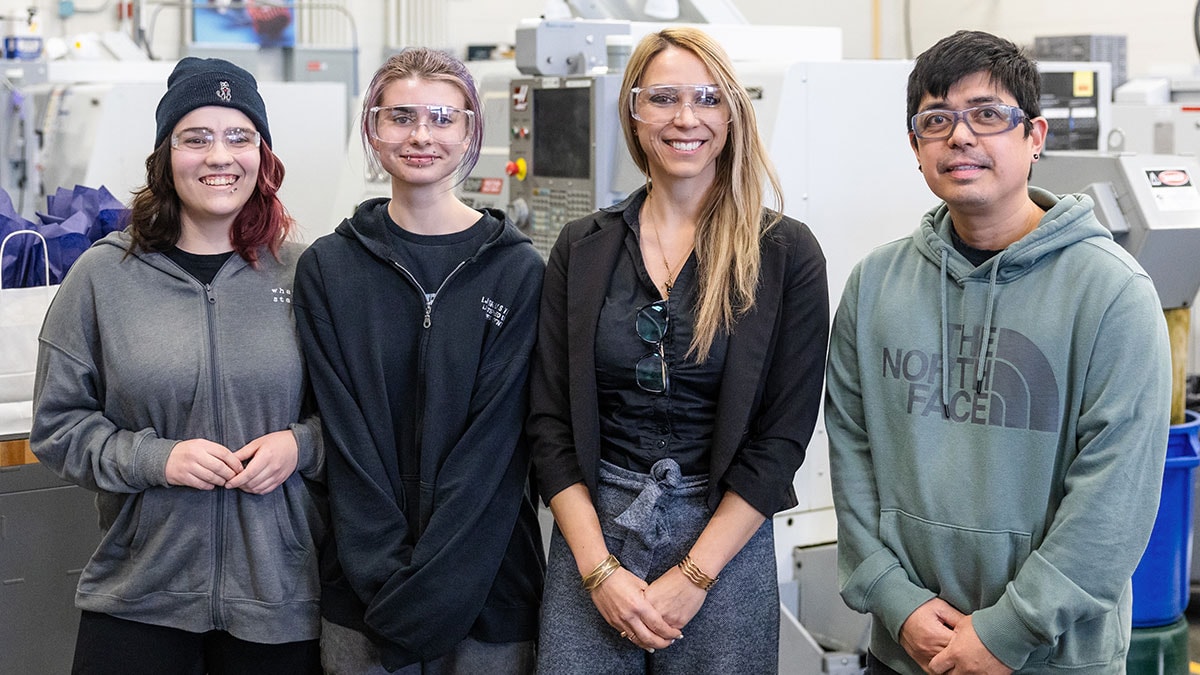
The impending skills shortage has long been looming across the global manufacturing industry. With experienced machinists retiring in large numbers, the number of newcomers entering the trade has struggled to keep pace. But the challenge for the industry as a whole goes deeper than that. At the same time, the role of the machinist itself is rapidly evolving, with automation, digital machining systems, robotics and data-driven processes transforming the demands placed on today’s manufacturing workforce.
For metal cutting and machining technology companies, the question is, ‘Who will operate the factories of the future?’
The response from Sandvik Coromant is centered on education and, specifically, a long-term partnership with the Northern Alberta Institute of Technology (NAIT) in Canada, that began nearly two decades ago.
The collaboration, designed to strengthen machinist education and ensure that the next generation of specialists is ready to meet the demands of modern manufacturing, led to the creation of the Sandvik Coromant Center for Machinist Technology, which opened in 2008 on NAIT’s main campus in Edmonton.
Education and real-life preparation
“Education has always been at the forefront of Sandvik Coromant – whether with our customers, partners, or within academic institutions,” says Alex Durkovics, Channel Marketing Manager for the Americas at Sandvik Coromant.
By working with schools like NAIT, we help develop the future of manufacturing.
As one of Canada’s leading polytechnics, NAIT focuses on practical training, closely aligned with industry needs, and has long been known for its hands-on approach to technical education.
Since the partnership began, Sandvik Coromant has invested more than €2 million in equipment, scholarships and program support that has helped NAIT expand its training capacity and modernize its machining curriculum.
For Sandvik Coromant, partnering with a school built around applied learning was a logical step. Both organizations shared a common goal – ensuring that students graduate not only with theoretical knowledge, but also with the practical skills needed to succeed on the shop floor, and preparing machinists who can adapt as manufacturing continues to evolve.
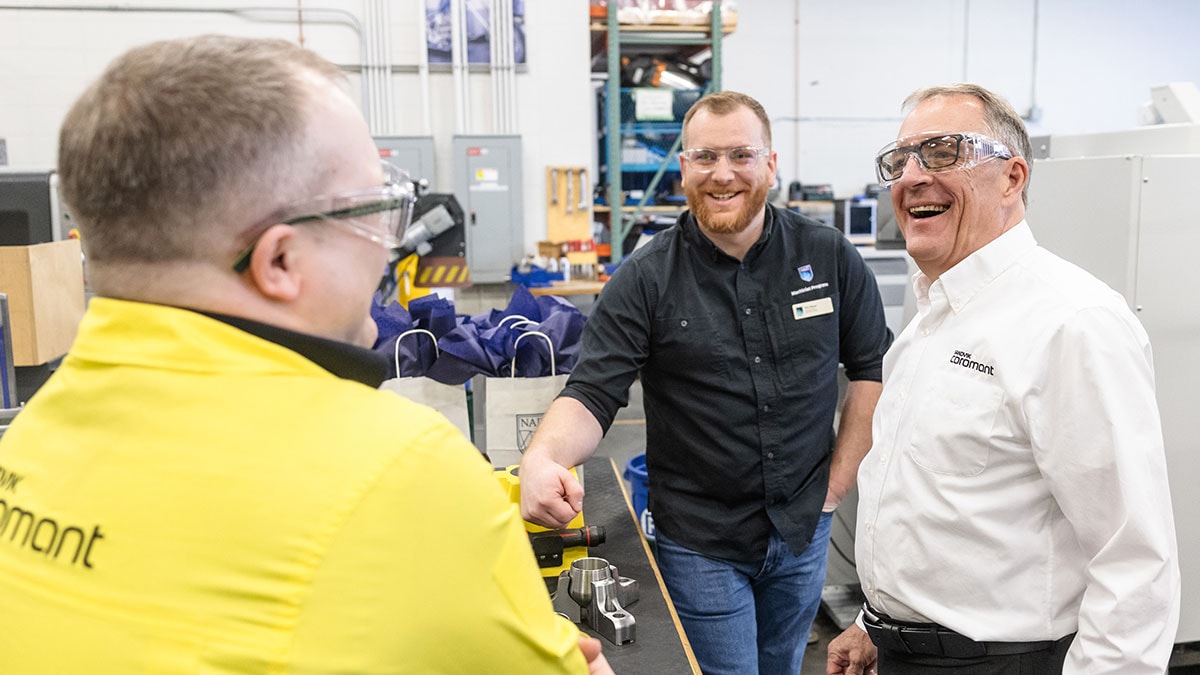
Space to grow in state-of-the-art facilities
Today, the 31,000-square-foot facility is one of Canada’s most advanced environments for machinist education, where students train using industrial-grade equipment and advanced tooling systems similar to those in modern production environments. The facility includes four CNC machinist labs, a metrology lab, smart classrooms, computer labs and a centralized tool selection area.
Each year, some 1,300 students develop skills in an environment tailored to meet industry expectations. Here, students learn to step into complex roles from day one, preparing for careers in industries such as aerospace, automotive, energy, mining, and medical manufacturing.
“Watching students gain confidence with advanced tools and seeing their curiosity evolve into capabilities is incredibly inspiring,” says Magalie Jackson, Cluster Manager, Sandvik Coromant Canada.
In terms of the center’s excellence and relevance, the numbers speak for themselves – 86 percent of participants gain employment within nine months of graduation, employer satisfaction stands at 98 percent, and more than 230,000 alumni are contributing to industry in Alberta and beyond.
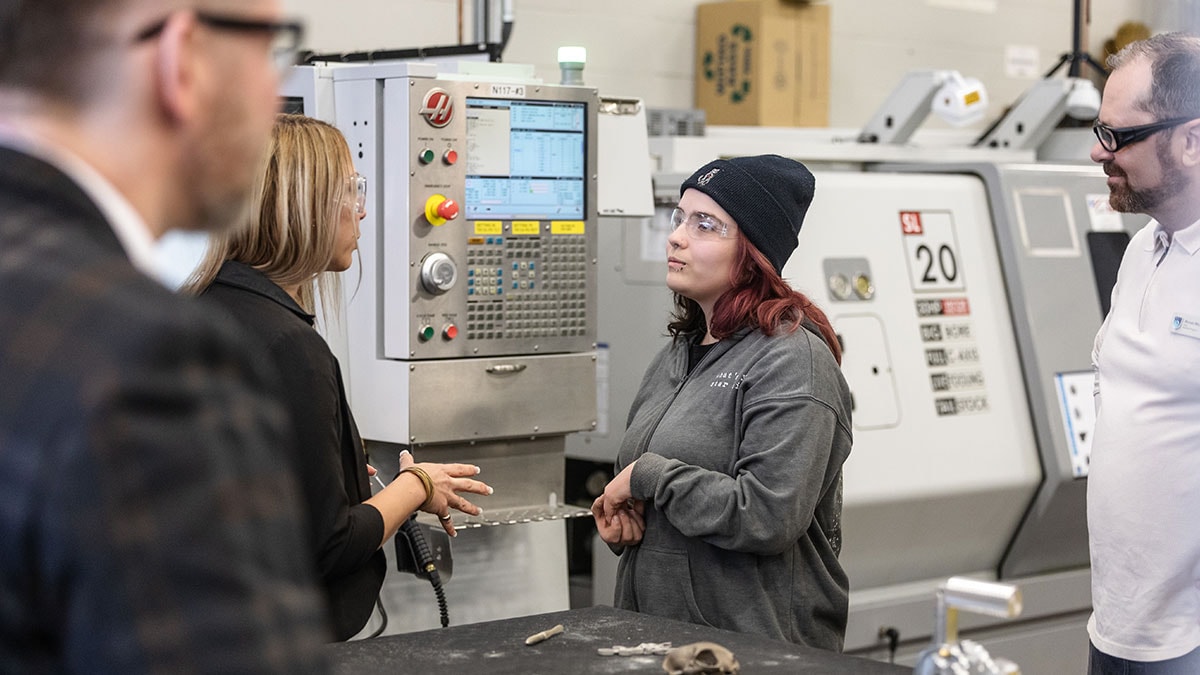
People-focused approach
For nearly 20 years, the collaboration between Sandvik Coromant and NAIT has demonstrated how companies and institutions can work together to build the workforce of the future.
More than simply filling jobs, the partnership focuses on preparing people to grow in an industry that evolves constantly. NAIT covers the learning environment and educational expertise, while Sandvik Coromant brings advanced tooling and industry perspective.
As Magalie Jackson concludes: “Together, we ensure that students are equipped with the skills and knowledge employers require, reducing the gap between educational program and industry. By investing our time, knowledge, and technology into the next generation of talent, we help build a stronger and more capable industry.”