
Driving sustainable impact across the machining industry
By launching major Life Cycle Assessment initiatives for its machining products, Sandvik is helping customers make the greatest sustainability impact while driving the industry towards a more sustainable future.
 Shaelyn Meyers, Sustainability and Environmental Specialist at Seco Tools.
In response to growing customer demand for product sustainability information and increasing regulatory requirements, Sandvik is launching Life Cycle Assessment (LCA) projects. The goal is to provide greater transparency on product environmental impacts while helping customers prepare for future reporting requirements.
“The demand tends to follow the legislation,” says Shaelyn Meyers, Sustainability and Environmental Specialist at Seco Tools. “There is increasing legislation requiring product carbon footprint data and that naturally comes up the supply chain.”
Meyers is the project manager for the Seco Tools LCA pilot project. Launched in 2024, this was the first initiative of its kind in the machining industry. The project involves developing LCA standards for approximately 30,000 products.
Measuring impact
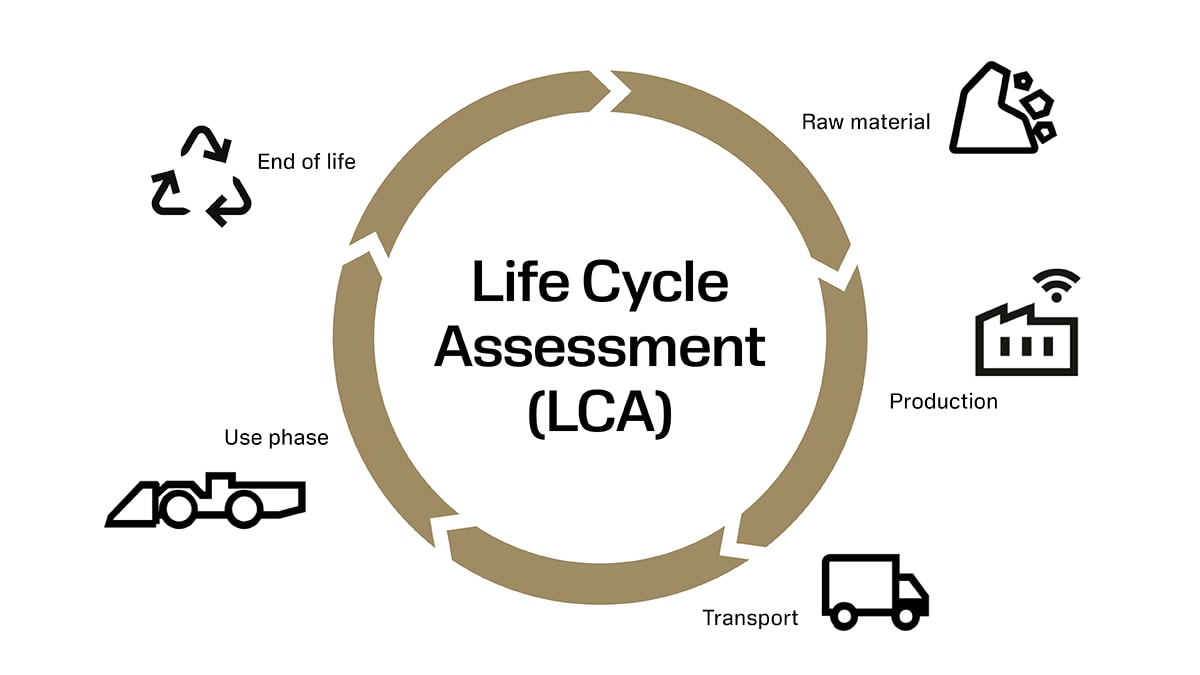
“LCA is a systematic methodology for assessing environmental and social impacts across a product’s lifecycle,” she says. “It is a way to gather data on raw material extraction, manufacturing, distribution, use and end-of-life treatment.”
Products are assessed using software developed by LCA startup Ecochain. But the data collection process itself remains highly collaborative and resource-intensive. “It's a significant investment,” says Meyers. “We are working across production sites, gathering data on things like energy use and working with procurement teams to obtain supplier information. We also collect data from product managers, R&D teams and end-of-life processes.”
Customer collaboration
The pilot phase has also involved close collaboration with customers to collect usage data and validate the methodology. Companies in the aerospace, medical and energy sectors have partnered with Seco to explore how LCA can support sustainability improvements.
For one industrial equipment supplier, Seco used LCA to show that changing a coolant fluid in a drilling process could reduce CO₂ emissions by 10 percent. With an aerospace customer, LCA demonstrated process cost and CO₂ savings from the adoption of a new tool.
"Customers have been very positive", says Meyers. “They want the data for their sustainability reporting, and some have asked for direct access through our website – we are working on that. We are the first in the industry to do this. That creates a competitive advantage. But it is also a collaboration tool, creating opportunities for knowledge sharing throughout the value chain. I work with a medical customer, for example, that is still early in its sustainability journey and we share our learnings.”
Greatest sustainability impact
Meyers sees significant benefits beyond the initial goal of regulatory preparedness. “It helps customers and suppliers future-proof themselves for upcoming legislation,” she says. “But it also highlights the benefits of sustainable solutions and circular business models. And perhaps most importantly, it helps identify hotspots in operations and supply chains so resources can be directed to where they deliver the greatest sustainability impact.”
The insights generated through LCA are already helping drive operational improvements within Seco, for example by reducing the carbon footprint of a coating process.
We might not have identified the opportunity as quickly without LCA. It helps us get more granular and dig into our operations.
At another site, we are replacing natural gas with a heat recovery and electrification process. Driven by LCA, this will greatly reduce the environmental impact of production.
Data-driven sustainability
“They say data is the new gold,” says Meyers. “LCA is a clear example. It is the next step in an organization’s sustainability journey once commitments have been made. Data is essential for meeting sustainability targets. LCA shows where the greatest environmental impacts occur in the value chain and how they can be addressed more effectively.”
Seco Tools aims to present initial LCA data for assessed products on its website by the end of 2026.