
New education program looks to raise mining expertise
Sandvik has high hopes for the launch of a unique five-continent mining engineering program aimed at training the next generation of leaders in the industry.
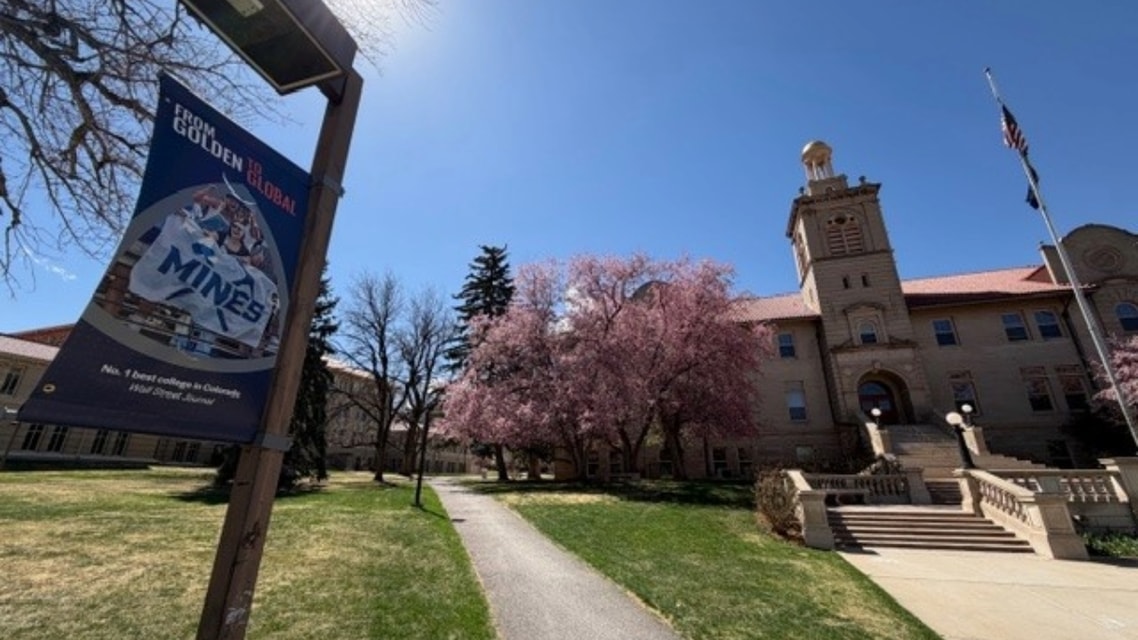
The new global postgraduate program, launched in March 2026, marks a shift in how Sandvik intends to build expertise. Reviving and expanding the former Sandvik International Mining School (SIMS), it brings together engineers and universities worldwide to address the growing complexity of mining.
According to program coordinator Allen Bellew, the need has been building for some time, because while Sandvik designs advanced mining equipment, many of its engineers and other equally qualified candidates do not come from mining backgrounds. “It has become more acute,” he says, “Many people from different related technical roles need to understand mining processes better, and to design and support products properly they need to know how equipment is used and what customers need in various mining applications
Academic excellence and real-world benefits
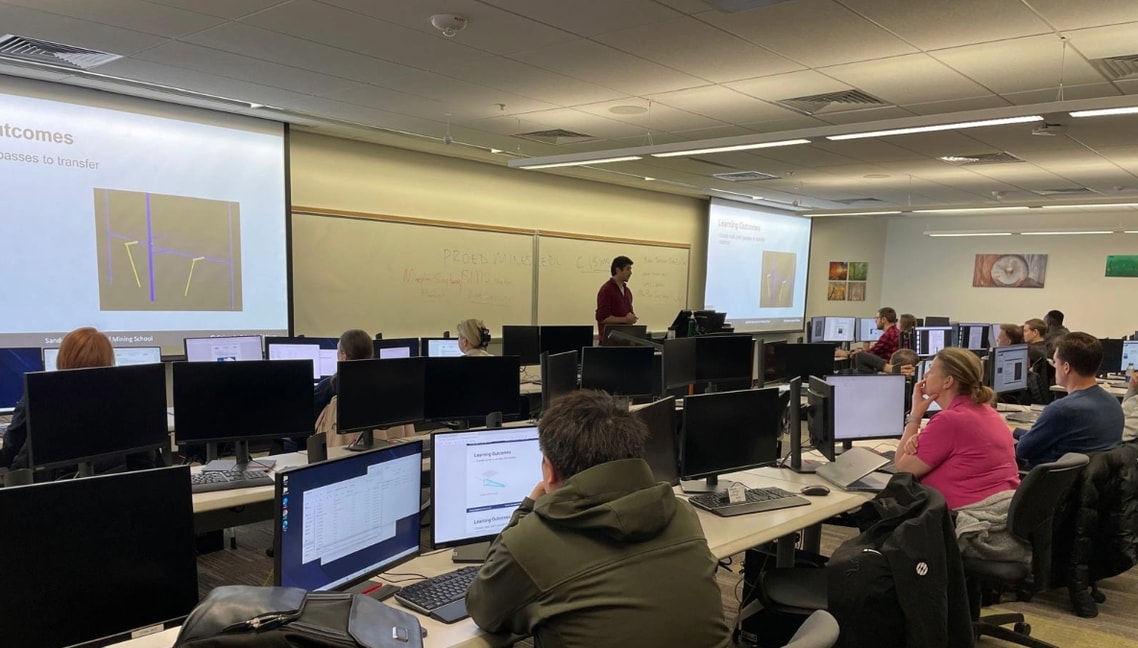
The two-year program is designed to close that gap. Delivered through a consortium of nine mining universities and led by the Colorado School of Mines, it combines academic study with hands-on learning. Participants travel across five continents, covering geology, mine design, automation, electrification, sustainability and mine closure.
“This is to elevate our employees,” Bellew explains. “It’s a postgraduate program for professionals without a mining background who are not mining engineers, where the emphasis is not on product training, but on building a deeper academic understanding of mining systems and processes.”
The latest cohort, which began in Colorado, will continue through South Africa, Chile, Europe and Australia before returning to the U.S. Along the way, participants visit more than a dozen operating mines. “They go to operating mine sites and get exposed to mining processes and equipment applications,” Bellew says. “It gives them real understanding.”
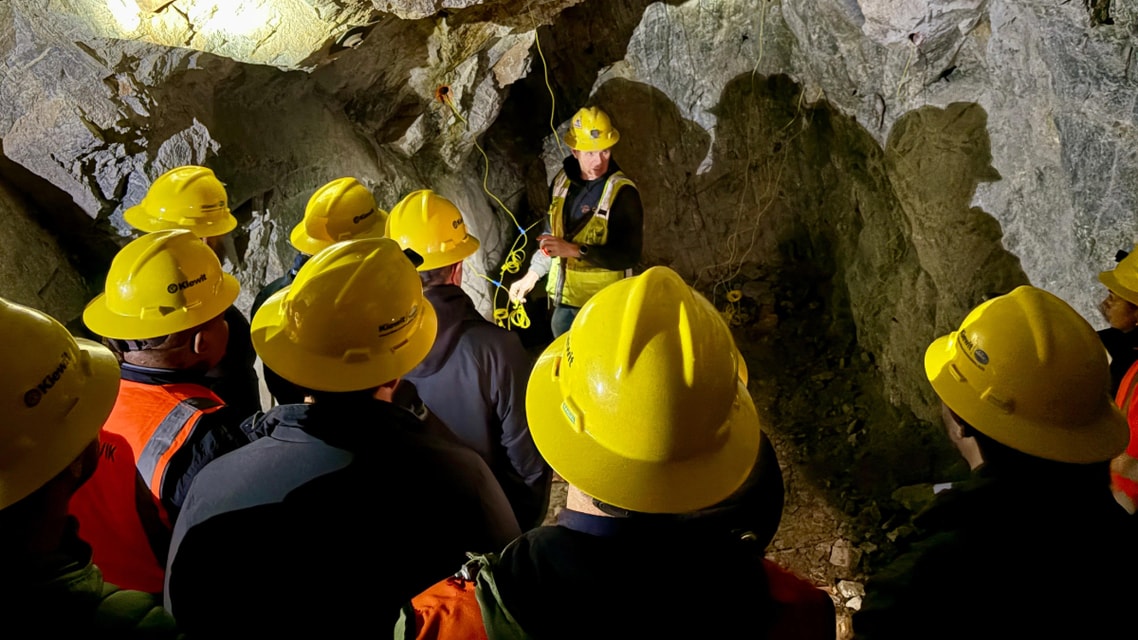
A defining feature is the program’s global structure. Few comparable initiatives combine postgraduate study across nine universities with this level of international mobility, giving participants exposure to varied mining environments and practices.
Peer interaction
Around 20 engineers are selected for each cohort through nomination, testing and evaluation. “It’s a rigorous process,” Bellew says, “and people feel they’ve earned their place.” Previous participants in SIMS programs consistently highlighted collaboration as a key benefit.
Face-to-face interaction was often the most valuable part. Relationships built over two years create strong networks and support retention.
Ursula Stokan from the Mechanical Cutting Division in Austria agrees that building a network is a key part of the program. “The opportunity to study at different mining universities around the globe gives me new perspectives, both professionally and personally. The program is much more than education – it is a unique journey where I can grow, build lasting relationships, and create a strong international network that will stay with me throughout my career,” she says.
Participants also gain exposure to different mining contexts across regions and disciplines, supporting long-term career development. The program has a strong track record – several senior leaders at Sandvik are alumni. “Three people in the business area management team have done it,” Bellew says. “It’s not a leadership program, but it clearly develops leadership capability.”
Another participant, Gideon de Villiers, from Screening Solutions in South Africa, echoes how the program benefits his role at work. “It has given me a much better understanding of how the different parts of the mining process fit together. This has been really useful in my role, as it helps me design equipment that works better within the bigger picture, and meets the needs of our customers more effectively,” he says.
For Sandvik, the initiative is a strategic investment. “The key is more competent people in mining,” Bellew says. “If you understand the field better, you make better decisions for customers.” In practice, that means engineers who understand not just how to design equipment, but how it adds value within an entire mining system
The company has committed to future cohorts, and at full scale, multiple groups may run simultaneously, potentially training more than 60 engineers in early cycles.
Reflecting a changing industry
The program also reflects wider industry changes. As mining becomes more automated, electrified and sustainability-focused, demand for cross-disciplinary knowledge is increasing. Engineers are expected to understand not only their specialties, but also the systems in which their technologies operate.
“It’s a big investment,” Bellew concludes, “but we want better-informed people. We need to understand customers better, offer better solutions and have better conversations. Mining is a small industry, and it needs more people with mining knowledge.”